Featured
Table of Contents
First of all, their academic backgrounds stand out. Psychiatrists are medical physicians who have actually completed clinical school and a residency in psychiatry. They are licensed to suggest drug, conduct checkups, and order or translate lab tests. This permits them to take into consideration both the physical and psychological aspects of a client's wellness.
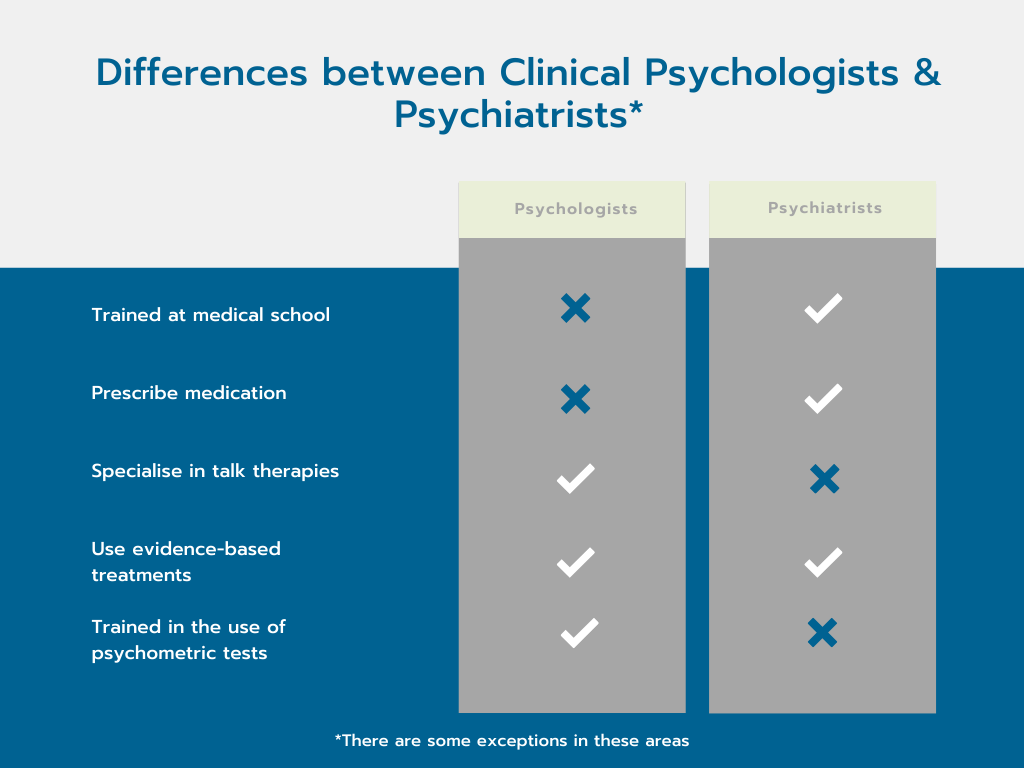
While both fields offer a range of specializeds, psychoanalysts frequently focus on particular psychological conditions or populations (like kid, teen, or geriatric psychiatry). Psycho therapists often specialize in locations like clinical psychology, counseling psychology, or business psychology.
On the various other hand, if you're experiencing emotional distress, dealing with life stress factors, or battling with anxiousness or moderate to moderate depression, a psychologist could be the best selection. Psychologists concentrate on offering psychotherapy and use different therapeutic strategies to assist people comprehend their feelings, thoughts, and actions. The ideal place to begin is with an expert you really feel comfy speaking with.
Keep in mind, it's not an either-or circumstance. Numerous individuals benefit from a mix of both medicine and psychotherapy. Psycho therapists and psychiatrists frequently function with each other to give extensive treatment. Navigating mental wellness problems can be challenging, however keep in mind that help is offered. At My Psychoanalyst, we have a team of experienced psychoanalysts and mental wellness companies committed to offering quality mental healthcare.
Trauma in Autistic Adults
Psycho therapists and psychoanalysts play essential functions in psychological healthcare, but their training, strategies and treatment techniques differ. Whether you're checking out the nuances in between these occupations for individual passion or career goals, understanding the distinctions is key. Continue reading as we look into the specifics of psychology and psychiatry and discover which course might align ideal with your desires and expert goals.
The term essentially suggests "medical therapy of the spirit," reflecting the progressing strategy to understanding and dealing with mental disorder. While both psychologists and psychoanalysts play essential functions in mental healthcare, their training, techniques and methods of therapy usually differ significantly. Below, we'll concentrate on the differences between these 2 professions, helping to clarify their special features and the settings in which they operate.

Both are rooted in a deep understanding of the human mind however diverge in emphasis and method. Psycho therapists normally begin their scholastic journey with an undergraduate level in psychology or a closely associated technique. After that, this structure is built on via a master's degree, which concentrates on sophisticated theories and practical applications of emotional practices.
This advanced level needs 4 to six years of committed study, including intensive research, scientific teaching fellowships and an extensive evaluation procedure. After finishing a bachelor's degree, which usually includes pre-medical or clinical coursework, striving psychoanalysts get in clinical college.
Benefits of Comprehensive ADHD testing
Both are trained to assess emotional concerns, develop therapy plans and offer therapy. They frequently team up, referring patients to one another to ensure they address all elements of an individual's wellness needs. However, psycho therapists mainly concentrate on assessing and treating mental and psychological conditions through non-medical methods, whereas, as clinical physicians, psychiatrists have the authority to carry out a more comprehensive array of medical procedures and suggest medication.
Deciding between these two occupation paths primarily depends on your rate of interests and exactly how you imagine your future work with patients. If you are attracted to restorative methods and assisting customers through counseling and psychological analysis without the usage of drug, psychology may be your course. On the other hand, if you have a strong rate of interest in medication and exactly how it intersects with psychological health and wellness, including the capacity to suggest drugs and treat intricate psychiatric conditions, psychiatry might be a far better fit.
So, take an action toward making a meaningful differencebecause at UND, we don't just study mental health, we assist boost it. Open All Sections Specialists normally fall under the classification of psychologists as they describe experts who give psychotherapy and therapy. Yes, psychologists can detect some mental diseases and offer treatment through different forms of treatment.
Cultivating Resilience for ADHD Management
A psychologist has a postgraduate degree in the Scientific research of Human Actions. Numerous psycho therapists have expert training and scientific skills to evaluate and treat your psychological wellness using psychiatric therapy (talk treatment), psychological assessments and screening. Psychologists assist people find out to cope more properly with life and relationship concerns and psychological health and wellness problems.
Professional psychologists can work in several setups, consisting of: Schools. While there's a whole lot of overlap between the professions of a counseling psycho therapist and clinical psychologist, the essential distinction is that a clinical psychologist focuses more on psychopathology (the research study of psychological health and wellness conditions); whereas a therapy psychologist helps people deal with psychological, social and physical stressors in their lives.
In spite of the word "professional," a scientific psycho therapist isn't a clinical doctor. While exercising clinical psychologists have a doctoral level either a Medical professional of Approach (PhD) degree in a field of psychology or a Medical professional of Psychology (PsyD) degree they do not have a medical doctoral degree (MD or DO).
Expert Support Systems
Psychologists treat psychological health problems with psychiatric therapy (talk treatment). Psychoanalysts usually treat much more complicated mental health conditions than psychologists, especially ones that call for medication or clinical therapies.

Latest Posts
Treating Anxiety for OCD
Exposure-Based Obsessive-Compulsive Disorder for Complex Presentations
What Trauma-Focused Brainspotting Addresses Depression More Effectively